

1979: Akio Morita launches the TPS-L2, and suddenly everyone can listen to music while walking. Cultural revolution, birth of jogging with headphones, end of silence on public transport. Thank you Sony, you changed everything. 🎧🚶
Before Apple made you think they invented portable music, there was the Sony Walkman
A 300-gram plastic box that plays cassette tapes, with 4 hours of battery life on two AA batteries, and a sound that crackles as soon as you move too fast. And yet, you'd happily drop €300 for a Sony WM-D6C in perfect condition.
Welcome to the world of the Walkman, the cult object that revolutionized portable music forty-five years before Spotify. The thing your dad carried around jogging with a terry cloth headband on his forehead. The player that sold 200 million units between 1979 and 1999, before getting destroyed by the iPod.
But in 2025, the Walkman is back. Not out of dumb nostalgia (well, maybe a little). But because an entire generation is fed up with streaming their music, depending on algorithms, and paying €11/month to listen to the same 50 artists on repeat.
Dig out your TDK tapes from the attic, rewind with a Bic pen, and dive into the history of the most iconic portable player of all time.
July 1st, 1979: Akio Morita invents portable music (and everyone thinks he's lost it)
It's 1979. Sony is already a Japanese electronics powerhouse (Trinitron, Betamax...). Akio Morita, the visionary boss, loves listening to opera on planes. But the portable cassette players of the time are massive: 2kg monsters with built-in speakers, designed for family picnics.
Morita calls his engineers: "I want an ultra-compact cassette player with perfect stereo sound. I want to take it everywhere. And I don't care if it can't record."
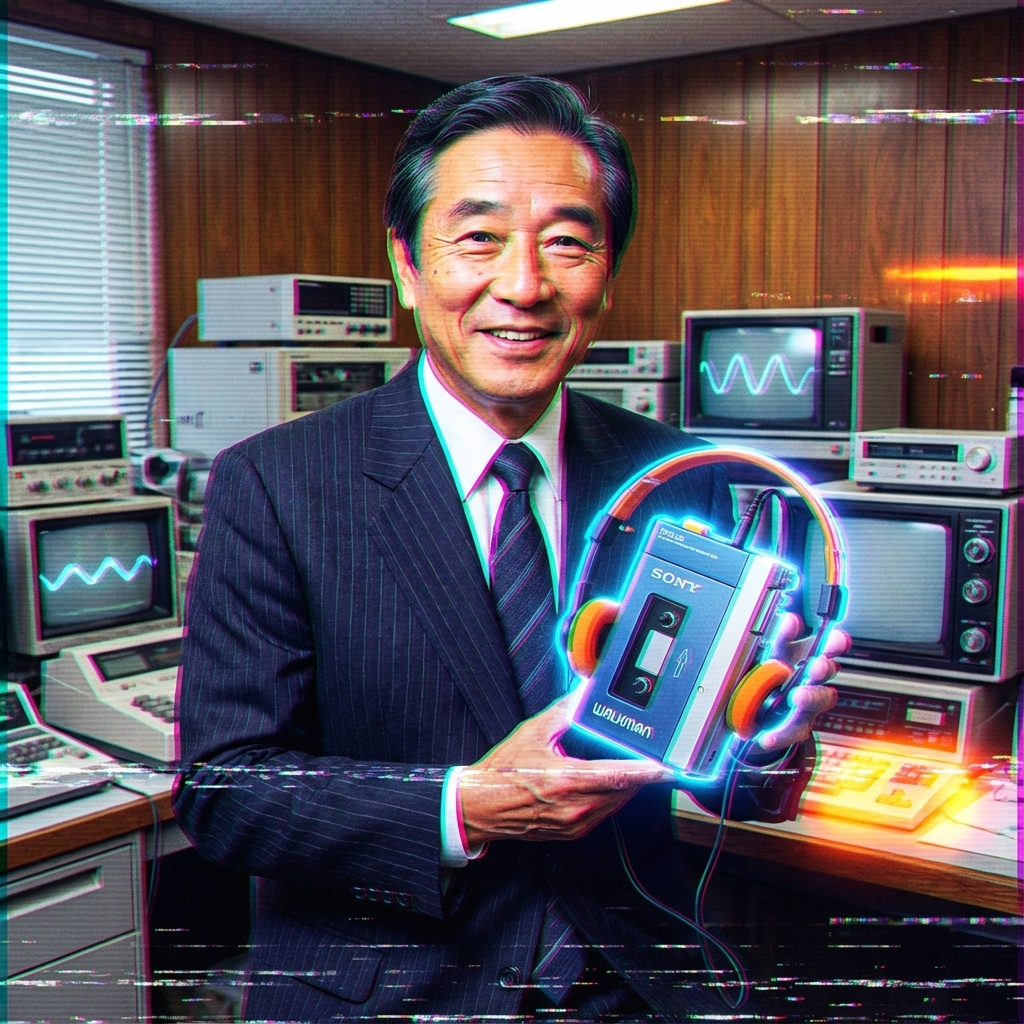
"Akio Morita: The visionary who put music in your pocket" Co-founder of Sony, Morita had the crazy idea in 1979: a portable cassette player with no recording function. Everyone thought it was stupid. 400 million Walkman sold later, who's laughing now? Absolute genius. 🎯🔥
His teams think he's insane. "A player with no recording function? Nobody's going to buy that." Sony engineers think it's commercial suicide. A tape player that can only play is like a car without reverse.
Morita doesn't care. He greenlights the project. On July 1st, 1979, Sony launches the TPS-L2 in Japan. Price: 33,000 yen (~$150). Internal codename: "Walkman."
Why "Walkman"?
Morita wanted "Walking Stereo." His marketing team thought it was too long. A Japanese-English compromise was reached: Walkman ("the walking man").
In proper English, it should be "Walking Man." But Morita embraces the Japlish. And it becomes iconic.
The launch story: Sony hands out Walkman units to young people on the streets of Tokyo. Instructions: "Walk around with it, dance, jump." Passersby think it's weird. People smiling alone in the street with headphones on? Some kind of cult?
Within three months, Sony sells 30,000 units. The following year, 1 million. The engineers who thought "nobody would want a player without recording" are kicking themselves.
The cult Walkman models: from the TPS-L2 to the WM-DD9 (the €3,000 holy grail)
Between 1979 and 2010 (yes, 2010—the last cassette Walkman was released in Japan that year), Sony produced over 400 Walkman models. Not all are created equal. Here are the legends you need to know.
TPS-L2 (1979): the founding father
Launch price: 33,000 yen (~$150, equivalent to $600 today)
Feature: Two headphone jacks (to listen with a friend), "hotline" button (to talk without removing headphones)
Fun fact: The "hotline" button was Morita's idea. He wanted to talk to his wife while they listened to opera together. Result: a button that cuts the music and activates an internal microphone. Nobody ever used that button. Sony dropped it from the 2nd generation. 2025 price: €150-400 depending on condition (complete box = €500-800)
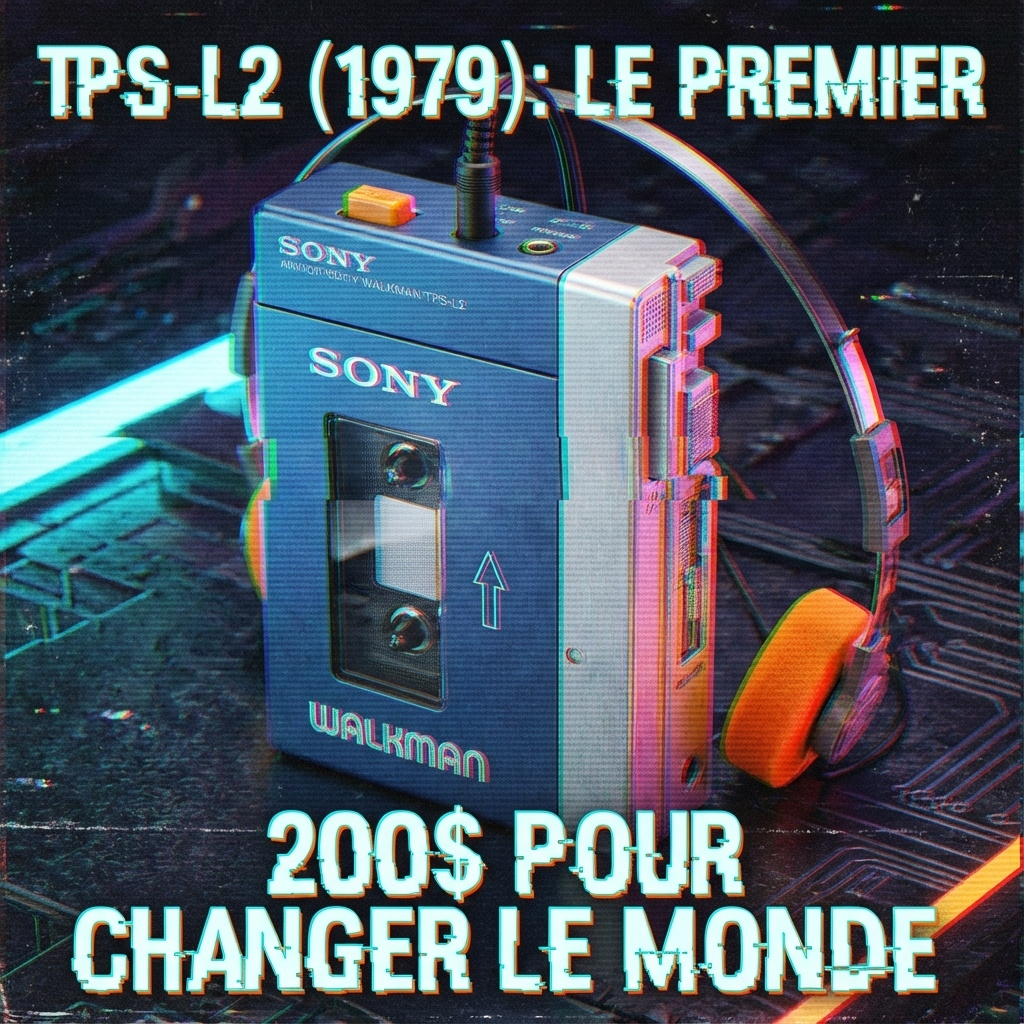
Iconic blue and silver body, 2 headphone jacks for sharing, legendary orange foam earbuds. $200 in 1979 (≈$800 today), but you became the coolest person on the street. Absolute cult object. 💎📼
Why it's cult: Because it's patient zero. The TPS-L2 invented the concept of personal portable music. Before it, music was collective (hi-fi systems, boomboxes). After it, music became intimate.
WM-2 (1981): the thinnest in the world
Launch price: 49,800 yen (~$225) Breakthrough: 30mm thick (size of a cigarette pack), "matchbox size" design Fun fact: To achieve this thinness, Sony removed the built-in batteries. The WM-2 ran on an external rechargeable battery connected by a cable. Users found it annoying (a cable dangling in your pocket). But collectors today love the radical design. 2025 price: €100-250 (rare, fragile, often broken)
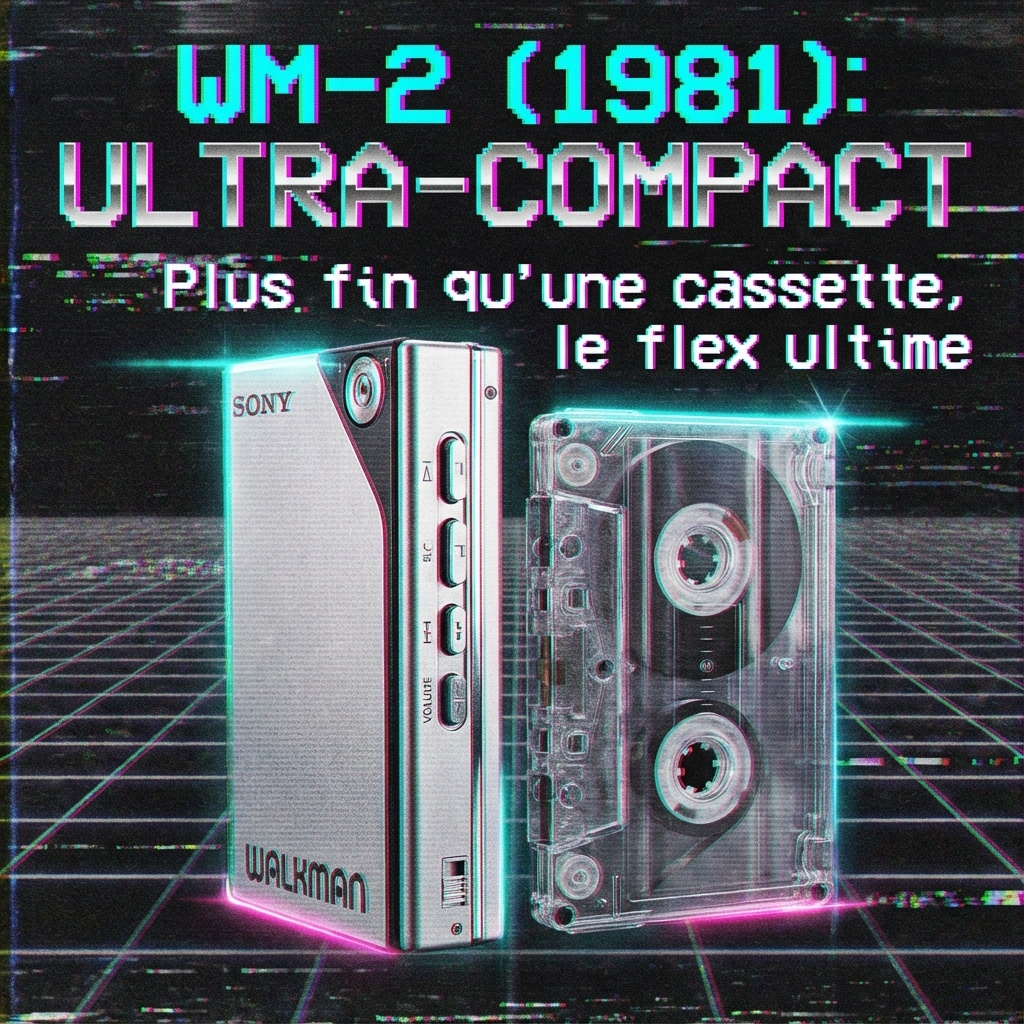
Sony miniaturized the Walkman to the extreme: thinner than a cassette case. Minimalist silver design, insane engineering. Wearing a WM-2 in 1981 = showing you're rich AND a tech enthusiast.
Why it's cult: Because Sony sacrificed practicality on the altar of design. The WM-2 was objectively less practical than the TPS-L2, but damn was it beautiful.
WM-D6C (1985): the "Professional" that costs a fortune
Launch price: 70,000 yen (~$350, equivalent to $950 today) Breakthrough: Studio-quality audio, Amorphous playback heads, Dolby C, recording capability Fun fact: The WM-D6C was the Walkman of radio journalists. In the 80s and 90s, war correspondents, documentary makers, and spies (yes, really) used the D6C for field recording. Total reliability, pro quality. Some units sold on eBay have BBC or NPR labels stuck on them. 2025 price: €600-1,200 (used), €1,500-2,000 new in box
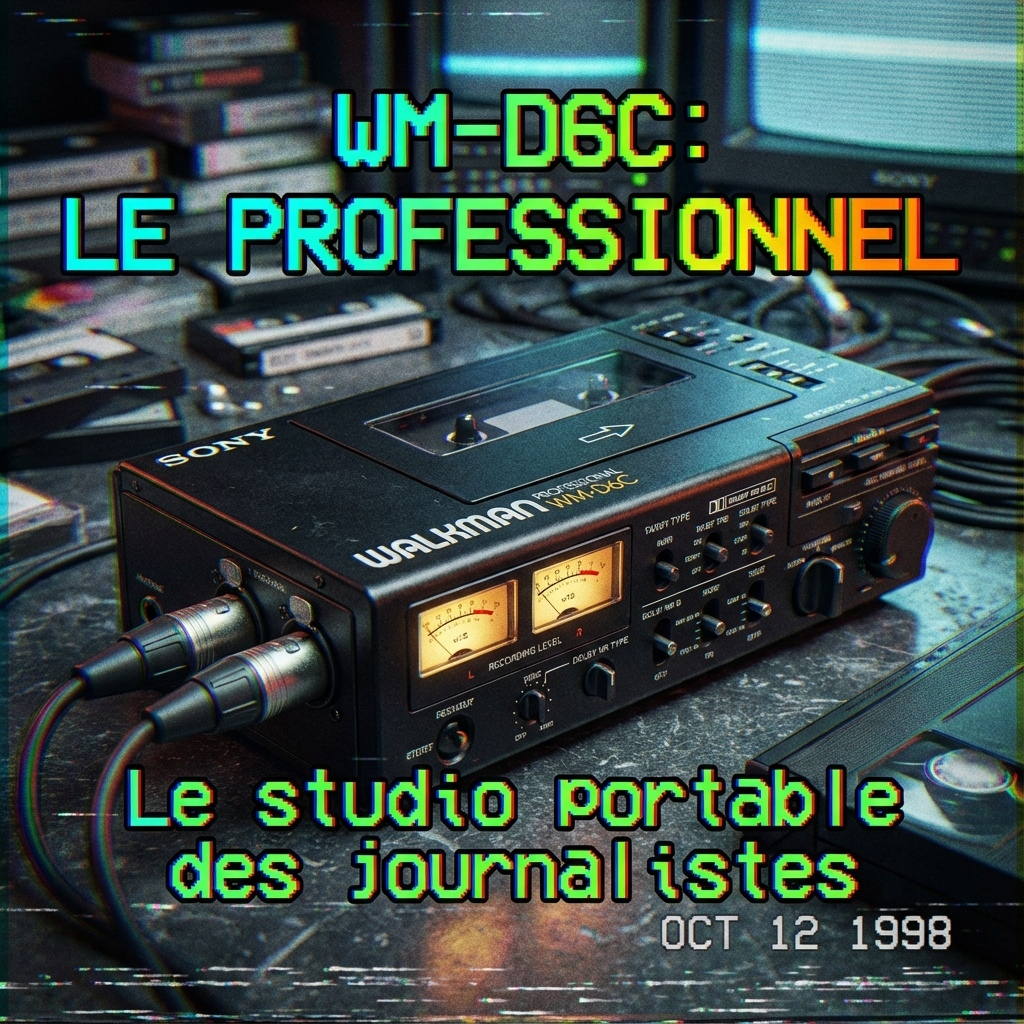
The tank of Walkman: black metallic body, VU meters, XLR inputs, Dolby, studio-grade recording quality. Radio reporters loved it, so did musicians.
Why it's the holy grail: Because it's the best Walkman ever made. Flawless stereo sound, metal construction (not plastic), repairable for life. Audiophiles pay €1,000 for a D6C because it sounds better than a modern hi-fi cassette deck.
WM-DD9 (1989): the direct drive beast at €3,000
Launch price: 98,000 yen (~$500, equivalent to $1,200 today) Breakthrough: Direct drive motor (quartz disc, zero jitter), titanium chassis Fun fact: The DD9 weighed 450 grams (twice a normal Walkman) and drained its batteries in 2 hours. But audiophiles didn't care. The direct drive eliminated "wow and flutter" (speed variation) that made cassettes sound terrible. Result: perfect sound, even on cheap tapes. 2025 price: €1,500-3,000 depending on condition (sealed new = €5,000+)
Why it's the ultimate grail: Because Sony only made a few thousand. And collectors fight to find one that still works. If you find a new-in-box DD9 on Yahoo Auctions Japan, sell a kidney and buy it.
WM-EX1 (1990): the space-age design that defies gravity
Launch price: 35,000 yen (~$180) Breakthrough: Futuristic transparent design, visible mechanism, "spaceship" look Fun fact: The WM-EX1 was designed by Sony's "Future Design" team, the same one that worked on Vision Gran Turismo concepts. The idea: show the internal mechanism like a luxury watch. Result: a Walkman that looks like a MoMA exhibit. 2025 price: €200-400 (design icon, sought after by collectors)
Why it's cult: Because it was the Walkman for dreamers. You didn't have it to listen to music. You had it to show it off.
WM-F5 (1983): the indestructible yellow Sports Walkman
Launch price: 29,800 yen (~$140) Breakthrough: Waterproof, reinforced plastic chassis, iconic neon yellow color Fun fact: Sony tested the WM-F5 by throwing it in a pool, dropping it from 2 meters, and leaving it in the rain for 3 hours. It still worked. Californian surfers used it strapped to their boards. Mountaineers took it to high altitude. The WM-F5 was the Nokia 3310 of Walkman. 2025 price: €100-250 (iconic, often broken but repairable)

The 80s, the fitness and aerobics boom. Sony answers with the Sports: yellow splash-proof rubber, huge buttons, indestructible. Perfect for running in the rain while listening to Eye of the Tiger. Peak 80s energy. 🏃♂️⚡
Why it's cult: Because it's the Walkman of the 80s. If you search "walkman" on Google Images, you'll find the yellow WM-F5. It's the face of the brand.
WM-EX622 (1997): the last of the greats
Launch price: 25,000 yen (~$120) Breakthrough: Dolby S (ultimate noise reduction), compact 90s design Fun fact: The WM-EX622 came out in 1997, the year the iPod didn't exist yet. It was the last great Walkman before the digital transition. Sony knew the cassette was doomed (the MiniDisc and MP3 players were arriving), but they released one last perfect model. Dolby S, smooth auto-reverse, 20h battery life. A swan song. 2025 price: €80-150 (excellent value for money)
Why it's cult: Because it's the best affordable Walkman in 2025. You want a functional, reliable Walkman with decent sound, without dropping €1,000? Get an EX622. You can find one on eBay for €100, swap the belt, and you've got a player that beats Spotify in terms of listening pleasure.
Why the Walkman died (and why it's coming back anyway)
The announced death: the iPod arrives in 2001
In 2001, Steve Jobs releases the iPod. 1,000 songs in your pocket. No more flipping tapes, no more rewinding with a Bic, no more sound quality degrading after 50 plays.
Sony tries to fight back with the digital Walkman (NW series). But it's too late. Apple has won. In 2010, Sony discontinues the last cassette Walkman (sold only in Japan). End of an era.
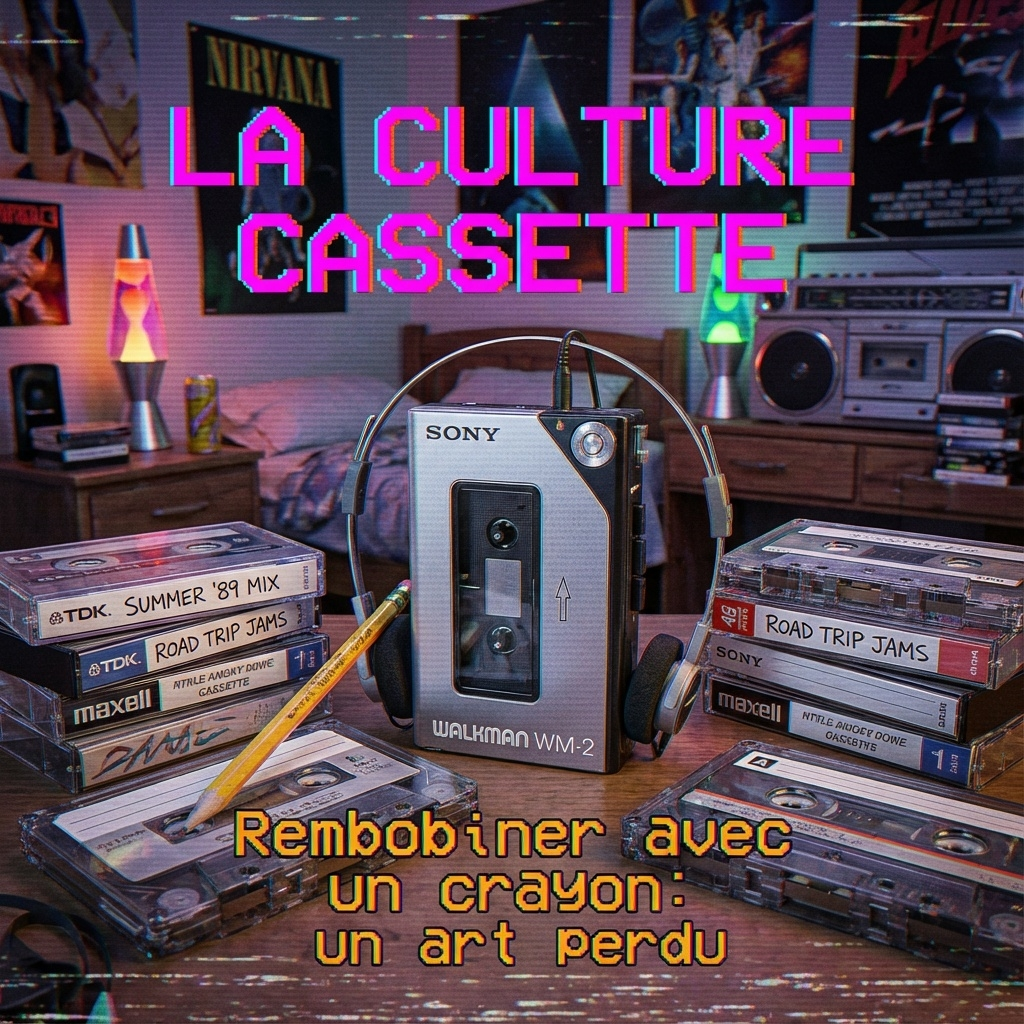
TDK, Maxell, Sony... Cassettes with handwritten labels, the pencil trick for untangling tape, mixtapes made with love. The Walkman generation remembers. Pure nostalgia. 💔📻
The decline in numbers:
- 200 million cassette Walkman sold (1979-2010)
- 450 million iPods sold (2001-2014)
Sony lost the portable music war. Ironically, Sony had invented the market.
The 2025 comeback: why people are buying Walkman again
Because we're sick of disposable digital.
1. Cassettes are something you own (unlike Spotify)
With Spotify, you rent your music. €11/month, for life. The day Spotify goes under, you lose everything.
With a cassette, you own the album. Forever. Even if Universal Music disappears, even if the internet collapses, your copy of Thriller still works.
2. The analog ritual (the meditation of rewinding)
Listening to a cassette is a ritual.
- You take the cassette out of its case.
- You insert it into the Walkman (that satisfying "clunk").
- You rewind to side A (if you forgot where you left off).
- You press Play.
- You listen to the album from start to finish, because skipping a track is too much hassle.
Result: you listen to music with attention. Not as background noise while you scroll Instagram.
3. The "imperfect" sound that has charm
Cassettes sound worse than digital. That's a fact. Limited bandwidth, tape hiss, saturation...
But that "imperfect" sound has a grain, a warmth that sterile MP3s don't have. It's like vinyl records: technically inferior, emotionally superior.
4. Tangible nostalgia (yes, that's a valid reason)
Buying a Walkman in 2025 means buying a piece of your youth. The sound of the motor spinning. The smell of warm plastic. The reassuring weight in your pocket.
It's irrational. But it's human.
2025 buying guide: how to buy a Walkman without getting ripped off
Ready to take the plunge? Here's the complete guide.
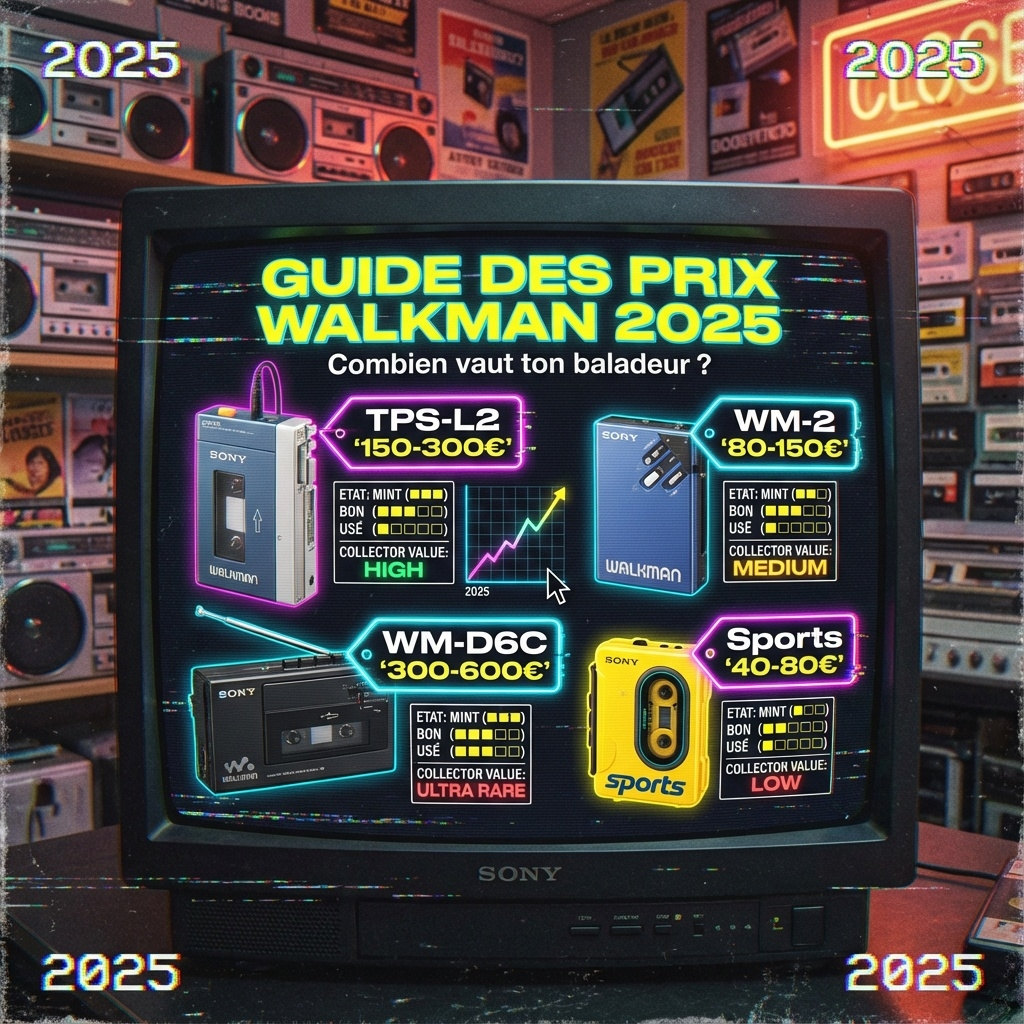
Which model to choose based on your profile
| Profile | Recommended model | 2025 price | Why? |
|---|---|---|---|
| Nostalgia beginner | WM-F5 Sport (yellow) | €100-250 | Iconic, robust, easy to find |
| Daily user | WM-FX421 (90s) | €40-80 | Reliable, long battery life, affordable |
| Budget audiophile | WM-EX622 (1997) | €80-150 | Excellent sound, clean design, Dolby S |
| Premium audiophile | WM-D6C Professional | €600-1,200 | Best sound, metal build, legendary |
| Hardcore collector | WM-DD9 | €1,500-3,000 | Ultimate grail, direct drive, rare |
| Design freak | WM-EX1 (transparent) | €200-400 | Art piece, space-age design |
Beginner tip: Start with a 90s Walkman (WM-FX or WM-EX series). Cheap (€40-100), reliable, easy to fix, and you can still find replacement belts on eBay.
Avoid early models (1979-1985) unless you're a collector. They're fragile, the belts are dead, and spare parts no longer exist.
Pre-purchase checklist (8 things to check)
1. Test playback (if possible in person)
- Insert a tape, press Play
- Does sound come from both channels (left/right)?
- Normal playback speed? (too slow/fast = dead belt)
- Does the tape advance smoothly? (jamming = broken mechanism)
2. Check the belt (critical part #1)
- Open the cassette compartment
- Look at the belt (the small black rubber band)
- If it's melted (sticky, gooey, broken), it's dead
- Replacing a belt: €5-15 + 30 min YouTube tutorial (doable)
3. Inspect the playback heads
- Open the cassette compartment
- Look at the metal heads (small shiny rectangles)
- If they're oxidized (rust, verdigris), run
- If they're just dirty (black/brown), that's cleanable (99% isopropyl alcohol + cotton swab)
4. Test the volume control
- Turn volume up/down
- Hear crackling? The potentiometer is dirty
- Fixable (contact cleaner spray), but negotiate the price
5. Check the headphone jack
- Plug in headphones, wiggle the plug
- Sound cutting out? Jack is dead or dirty
- Cleanable, but annoying
6. Check the battery compartment
- Open the battery compartment
- See white/green corrosion? Batteries leaked, contacts oxidized
- Fixable (white vinegar + metal brush), but tedious
7. Check the physical condition
- Cracks in the case? Run (structural weakness)
- Scratches? Normal, it adds character
- Stickers? Vintage charm or horror, your call
8. Ask about history
- "How was it stored?" (damp attic = guaranteed corrosion)
- "When did it last work?" (if "dunno, haven't tested it," be careful)
- "Belt replaced?" (if yes, jackpot)
Where to buy in 2025
| Platform | Average price | Reliability | Tip |
|---|---|---|---|
| eBay | €50-250 | Good | Check seller feedback, look for "tested working" |
| Yahoo Auctions Japan | €100-3,000 | Excellent | Via proxy (Buyee, FromJapan), rare Japanese models, import fees |
| Facebook Marketplace | €20-100 | Low | Often untested, sold "as is," but good deals |
| Walkman forums (tapeheads.net) | Varies | Excellent | Passionate community, serious sellers, sometimes restored |
| Etsy | €80-400 | Good | Often restored, premium prices, nice packaging |
Budget tip: Search "walkman not working" or "walkman broken." People sell perfectly repairable Walkman units (dead belt, leaked batteries) for $20-40. Spend 1 hour on it, and you've got a working Walkman for $60 total.
Yahoo Auctions Japan (for the hardcore): If you're after a WM-DD9, a WM-D6C, or rare models, this is where to go. Japan is the Walkman vintage paradise. Via a proxy (Buyee.jp), you can bid. Watch out for fees (proxy + shipping + customs = +40% of the price).
Restoration 101: bringing a dead Walkman back to life
Bought a Walkman for €30 that won't turn on? Don't panic. Here's the revival guide.
Step 1: Clean the battery contacts (20 min)
Symptom: Walkman won't turn on, or turns on then immediately cuts out.
Cause: Batteries leaked, contacts oxidized.
Fix:
- Remove batteries (if any are still in there, toss them)
- White vinegar (or lemon juice) on the contacts
- Toothbrush or fine metal brush
- Scrub until the metal shines
- Rinse with water (yes, it's OK), dry completely (hair dryer)
- Insert fresh batteries, test
Success rate: 70% (if it was just the contacts)
Step 2: Replace the belt (30-45 min, beginner level)
Symptom: Walkman turns on, but tape doesn't spin (or spins poorly).
Cause: Dead belt (it melts over time, becomes sticky).
Fix:
- Buy a replacement belt (eBay: "walkman belt + your model," €5-15)
- YouTube tutorial: "[your model] belt replacement"
- Open the Walkman (Phillips screws, plastic lever for clips)
- Remove old belt (clean the black residue with isopropyl alcohol)
- Install new belt (it's a bit fiddly, that's normal)
- Close up, test
Success rate: 90% (if it was just the belt)
Tip: Order several belts (various diameters). Better to have too many than struggle with a belt 0.5mm too big.
Step 3: Clean the playback heads (10 min)
Symptom: Muffled sound, missing highs, one channel dead.
Cause: Dirty playback heads (accumulated magnetic oxide).
Fix:
- Buy 99% isopropyl alcohol (pharmacy or Amazon, €5)
- Cotton swab dipped in alcohol
- Gently rub the metal heads (don't force it, they're fragile)
- Let dry for 5 min
- Test with a tape
Success rate: 80% (if it was just dirt buildup)
Step 4: Replace capacitors (advanced level, 2h)
Symptom: Distorted sound, crackling, dead channel even after cleaning.
Cause: Dead electrolytic capacitors (they dry out over time).
Fix:
- Identify faulty capacitors (usually the biggest cylindrical ones)
- Order replacements (matching values, eBay/Mouser)
- Desolder with a soldering iron (35W, fine tip)
- Solder new capacitors (respect polarity: stripe = -)
- Test
Success rate: 60% (if you've never soldered, start with a different project)
Note: If you're not comfortable with a soldering iron, take it to an electronics repair shop (€50-100 labor).
Essential accessories for using your Walkman in 2025
1. Blank tapes (for recording)
- TDK SA (Type II): €5-10 each on eBay (Chrome, excellent quality)
- Maxell XLII (Type II): €8-15 (audiophile reference from the 80s)
- Sony Metal-XR (Type IV, rare): €20-50 (the best of the best, if your Walkman supports Metal)
Tip: Avoid Type I tapes (Ferric), the audio quality is terrible. Go straight for Type II (Chrome) or Type IV (Metal) if your Walkman supports them.
2. Bluetooth adapter cable (for 2025)
- FiiO BTR5 (Bluetooth DAC): €120
- Connected via jack to the Walkman, you listen wirelessly
- Absurd? Yes. Practical? Also yes.
3. Vintage headphones (for the full nostalgia setup)
- Sony MDR-W08 (80s Walkman headphones): €30-60
- Koss Porta Pro (1984, still sold new): €50 (living legend)
- If you're rich: Sennheiser HD 414 (1970s): €150-300
4. Hi-fi cassette deck (for recording from Spotify/vinyl)
- Tascam 122MKIII: €200-400 (used, pro quality)
- Sony TC-WE475 (double deck): €100-250
- You capture the audio stream (via jack cable from your PC/turntable), record to cassette, listen on Walkman
- It's dumb, but it's cool
5. Cassette cleaning kit
- Cleaning cassette (with fluid): €10-15
- Cleans heads without disassembling the Walkman
- Use every 20-30h of listening
Special editions worth a fortune
Some Walkman units were produced as limited editions. Today, they sell for big money.
| Edition | Year | Feature | 2025 price |
|---|---|---|---|
| WM-701S Sterling Silver | 1984 | Solid silver case, numbered | €1,000-2,500 |
| WM-701C 24K Gold | 1984 | 24-carat gold plated, Japan edition | €800-1,800 |
| My First Sony (series) | 1987-1995 | Colorful kids' design, cult collector items | €80-200 |
| Coca-Cola WM | 1988 | Coca-Cola red, US promo edition | €150-350 |
| Ferrari WM-EX8 | 1996 | Ferrari red, prancing horse engraving | €200-450 |
Tip: The "My First Sony" editions (bright blue, red, yellow) are everywhere on eBay but undervalued. You find them for €50-80, while they'll climb to €150-200 in 5 years. Good nostalgia investment.
Cassettes vs digital: the audio quality showdown
The question everyone asks: does a cassette sound better than an MP3?
Short answer: No. Technically, a cassette is inferior to digital.
Long answer: It depends on your setup and expectations.
Technical comparison
| Format | Bandwidth | Signal-to-noise ratio | Distortion |
|---|---|---|---|
| Type II cassette (Chrome) | 30 Hz - 15 kHz | 60-65 dB | 1-3% |
| MP3 320 kbps | 20 Hz - 20 kHz | 90+ dB | <0.01% |
| FLAC lossless | 20 Hz - 20 kHz | 96+ dB | 0% |
On paper, MP3 crushes cassettes. But.
Why cassettes sound "better" (subjectively)
1. Analog compression Cassettes have a natural saturation that rounds off the highs and thickens the bass. The sound is "warm," "organic." MP3, on the other hand, is clinically precise, but "cold."
2. Dolby B/C/S Dolby systems reduce tape hiss by dynamically compressing the highs. Result: a "smoothed" sound that's less fatiguing than a modern brickwalled MP3.
3. The placebo effect (and that's OK) Listening to a cassette is ritualized. You take it out, put it in, rewind it. Your brain associates this ritual with increased pleasure. It's not rational, but it's real.
Verdict
If you want the best objective audio quality, get a hi-res DAP with FLACs. If you want the best subjective listening pleasure, get a Walkman with Type II cassettes.
Beginner mistakes to absolutely avoid
1. Buying a "for parts" Walkman thinking you'll fix it easily
- "For parts" Walkman units on eBay are often irreparable (broken mechanism, missing parts)
- Unless you're a soldering pro with a parts stockpile, stay away
2. Using cheap alkaline batteries
- Cheap batteries leak within 6 months
- Result: oxidized contacts, ruined Walkman
- Invest in Duracell or Eneloop rechargeable batteries (1.2V NiMH)
3. Never cleaning the playback heads
- If you never clean, magnetic oxide builds up
- Result: muffled sound, dead highs, tape sticking
- Clean every 10-15h of listening (99% isopropyl alcohol)
4. Leaving a tape in the Walkman for months
- The tape stays under tension on the heads
- Result: permanent imprint, altered sound
- Always eject the tape after listening
5. Storing your Walkman in a damp place
- Attic, basement, garage = guaranteed corrosion
- Electronic components rust, belts melt
- Store dry, room temperature, in an airtight box (with a silica gel packet if possible)
6. Buying a "rare" Walkman without checking parts availability
- Some exotic models (WM-R, WM-W series) have no replacement belts available
- If it breaks, you're stuck
- Prioritize popular models with large aftermarket support (WM-D6C, WM-EX, WM-FX series)